Product Knowledge

bush hammer plate

Articles tagged bush hammer plate.

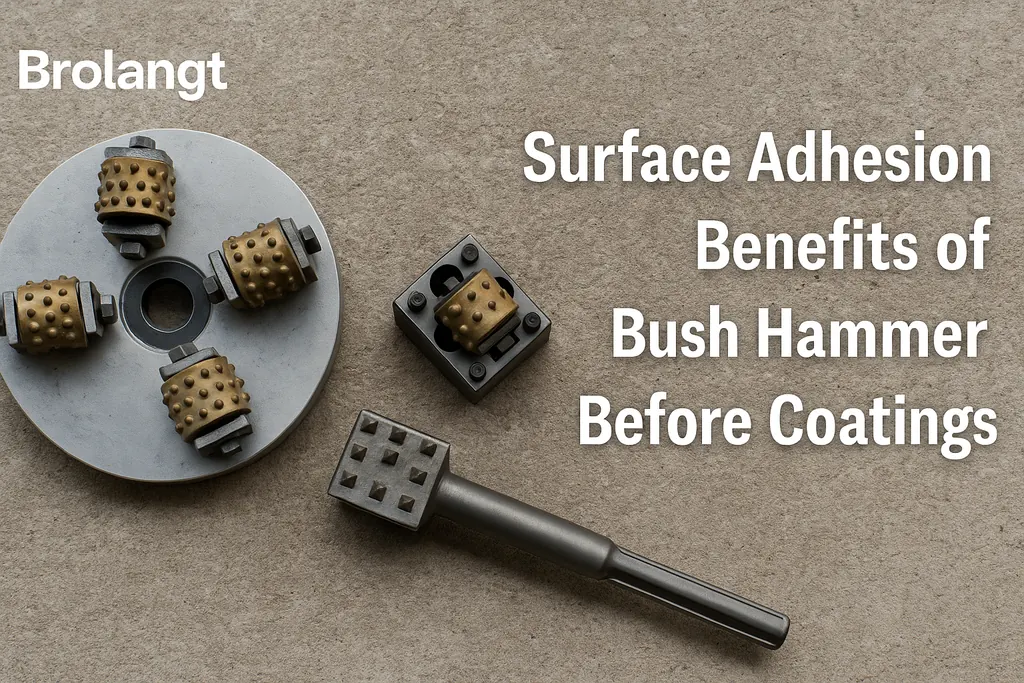
Brolangt blog header image showing bush hammer tools on textured concrete surface with title Surface Adhesion Benefits of Bush Hammer Before Coatings

Surface Adhesion Benefits of Bush Hammer Before Coatings

Surface Adhesion Benefits of Bush Hammer Before Coatings Introduction In the world of stone and concrete finishing, one of the most critical factors for long-term performance is surface adhesion. Coatings, overlays, and adhesives rely on a properly prepared substrate to bond effectively. While grinding and sanding are

Read article
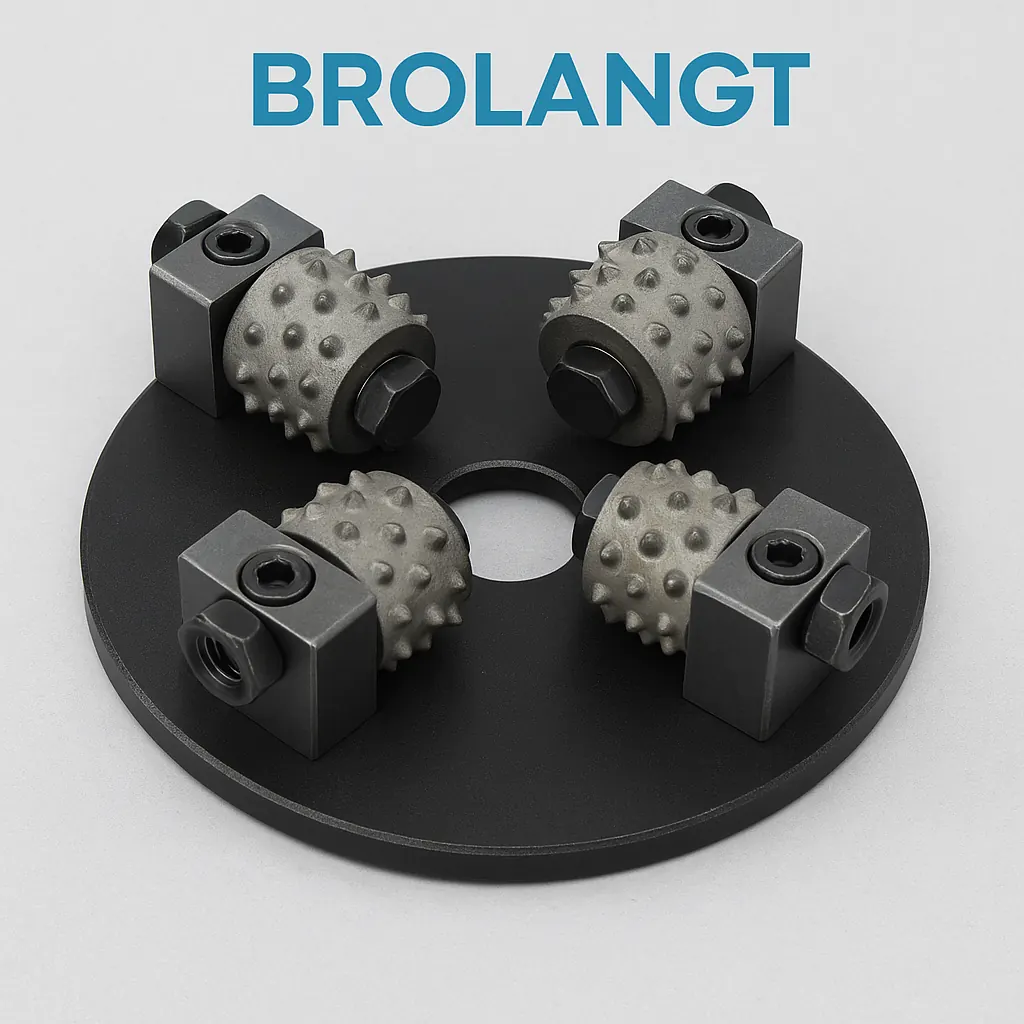
Brolangt bush hammer plate used for removing non-metallic coatings from concrete and stone surfaces, professional construction tool branding image

Using Bush Hammer Plate to Remove Non-Metallic Coatings

Using Bush Hammer Plate to Remove Non-Metallic Coatings Using Bush Hammer Plate to Remove Non-Metallic Coatings Introduction In construction and surface preparation, one recurring challenge is removing old non-metallic coatings—such as epoxy, polyurethane, mortar overlays, and adhesive residues—without damaging the sub

Read article
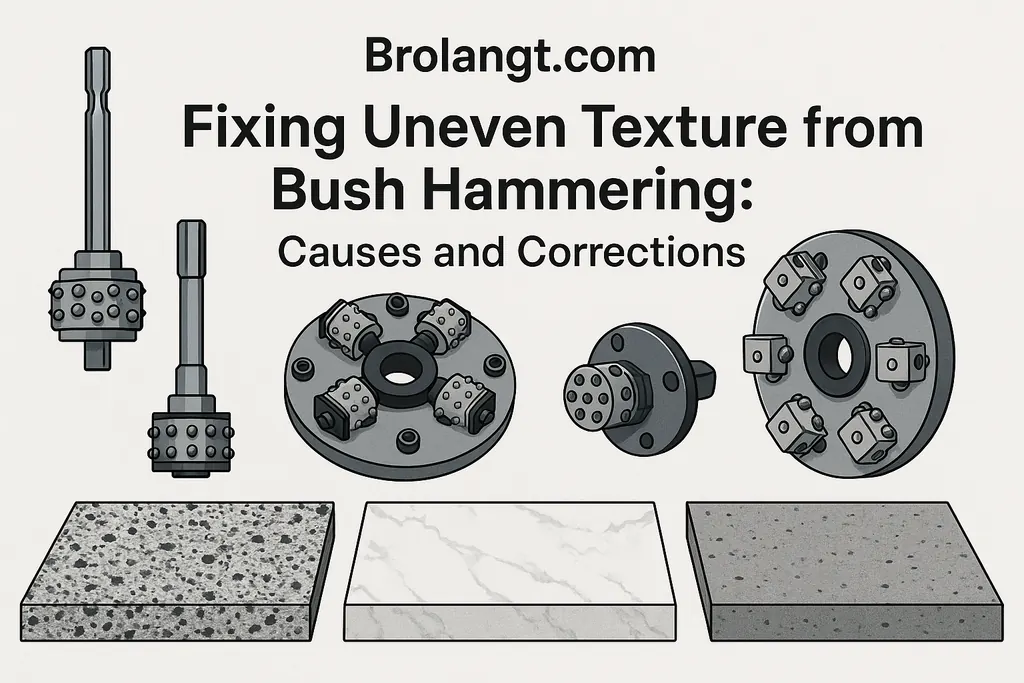
Brolangt blog header image showing bush hammer tools with granite, marble and concrete slabs, featuring title Fixing Uneven Texture from Bush Hammering

Fixing Uneven Texture from Bush Hammering: Causes and Corrections

Fixing Uneven Texture from Bush Hammering: Causes and Corrections Fixing Uneven Texture from Bush Hammering: Causes and Corrections Introduction Bush hammering is a trusted technique in the stone and concrete industry, used to create a roughened, anti-slip texture on surfaces. Whether preparing granite for finishing, e

Read article
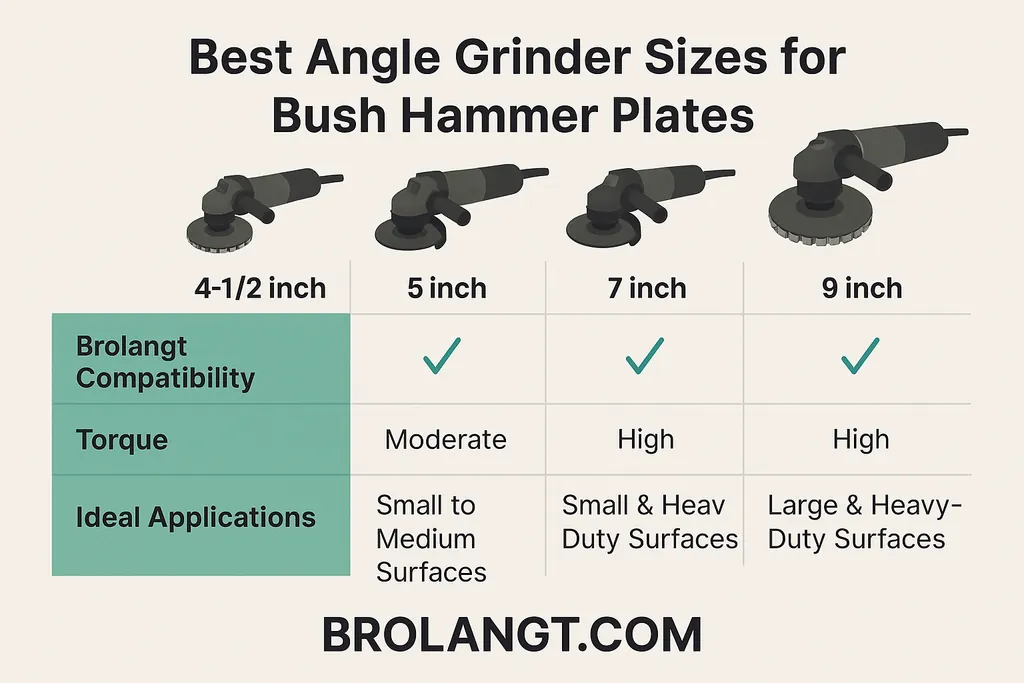
Comparison chart of angle grinder sizes for bush hammer plates, highlighting Brolangt brand compatibility, torque performance, and ideal applications

Best Angle Grinder Sizes for Bush Hammer Plates

Best Angle Grinder Sizes for Bush Hammer Plates The “right size” for a bush hammer plate on an angle grinder isn’t just a diameter choice. It’s a balance of coverage vs. control, RPM vs. torque, head mass vs. user fatigue, and the surface profile (CSP) you’re aiming to create. This field guide breaks down 115/125/150/1

Read article