
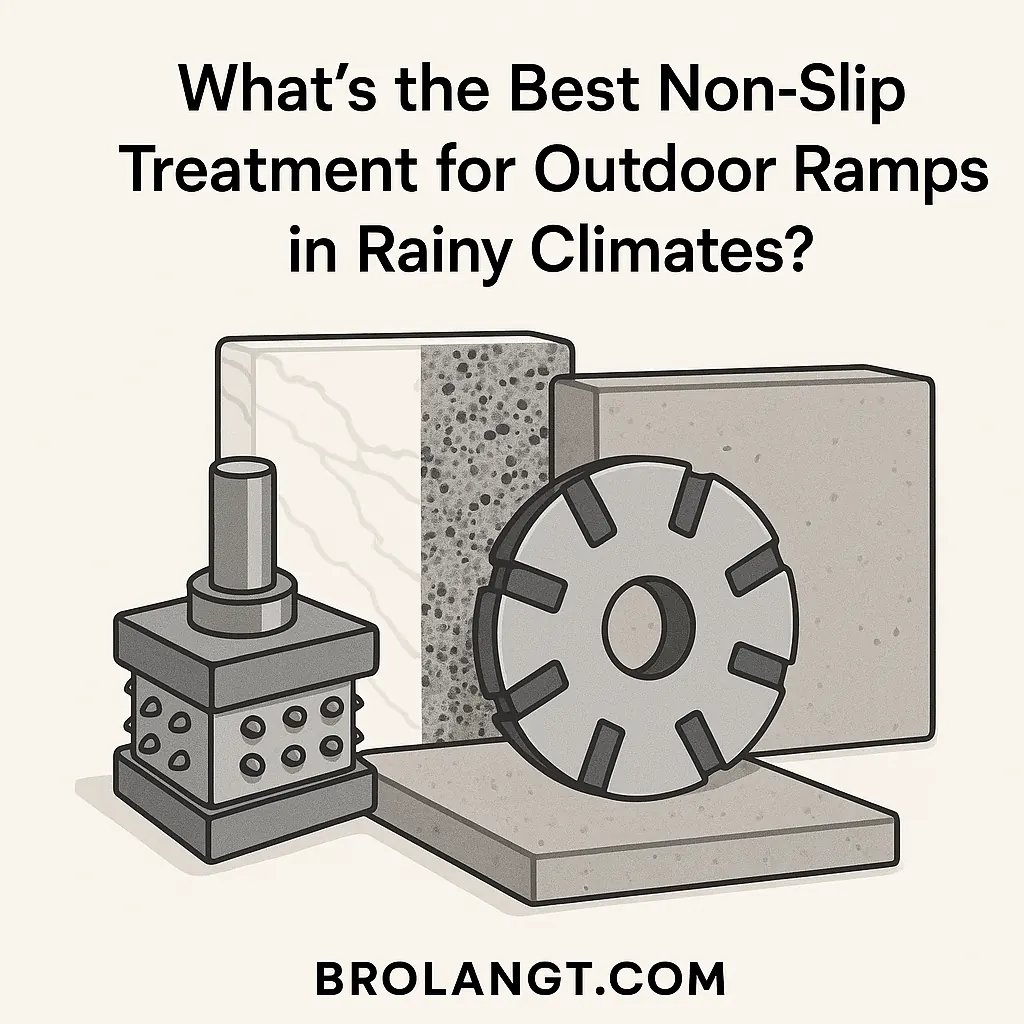
What’s the Best Non-Slip Treatment for Outdoor Ramps in Rainy Climates?
Introduction
Background: Why Ramps Become Slippery
Concrete and stone ramps are porous. When exposed to continuous rain, organic matter, moss, and fine dust accumulate, creating a film that reduces friction. Studies from ASTM International show that untreated concrete in wet conditions may lose up to 60% of its dry surface friction coefficient. Painted or sealed ramps may appear smoother, but water film and wear often make them more dangerous than untreated surfaces.
Professional Surface Treatment Options
1. Bush Hammer Texturing
Bush hammers use tungsten carbide teeth to roughen the surface of stone or concrete, creating a CSP (Concrete Surface Profile) of 4–5. This texture provides long-lasting slip resistance even in wet conditions. For smaller ramps, the Brolangt 5-inch Bush Hammer Plate is ideal for handheld grinders. For larger projects, contractors may rely on SDS-MAX Bush Hammer Tools.
2. Anti-Slip Coatings
Polyurethane or epoxy coatings embedded with grit are common. They can achieve friction coefficients above 0.6 (the ADA minimum for ramps), but their lifespan may be limited in areas with rainfall exceeding 1,200 mm annually. Reapplication every 2–3 years is typical, adding maintenance costs.
Industry Case Study
At a stone fabrication facility in North America, ramps used for forklift access became dangerously slick during rainy months. Coatings had failed within two years. The facility adopted Brolangt SDS-Plus Bush Hammers to roughen high-traffic zones, creating CSP 5 surfaces. After six months of monitoring, slip-related incidents dropped to zero, even during heavy rainfall. Maintenance frequency decreased by 40%.
Comparison: Correct Practices vs. Common Mistakes
| Correct Approach | Common Mistake |
|---|---|
| Using bush hammer tools to achieve CSP 4–5 texture | Relying solely on paint with sand additives |
| Scheduled inspection every 12 months | Waiting until visible accidents occur before maintenance |
Application Tips for Rainy Climates
- Target a slip resistance coefficient above 0.65 for outdoor ramps.
- Combine mechanical texturing (bush hammer) with protective sealers designed for wet freeze–thaw cycles.
- Ensure proper drainage design: even the best texture fails if water pools on the ramp.
- Schedule cleaning at least quarterly to remove biofilm and moss.
Common Misconceptions
External References
- ISO Standards for Surface Preparation
- Stone World Industry Reports
- Statista Construction Safety Data