
# What Is a Sample Cup Grain Moisture Tester and How Does It Work?
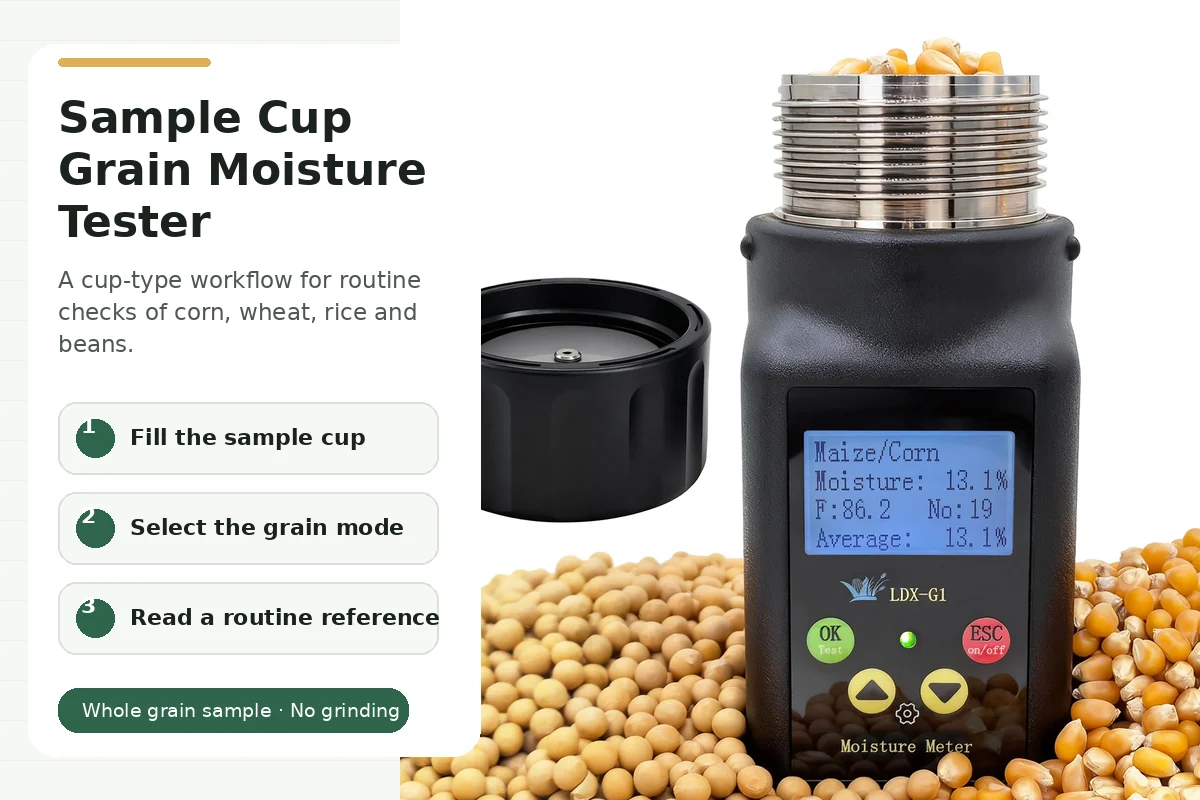
A sample cup grain moisture tester is a portable grain moisture meter that checks a collected grain sample inside a cup or measuring chamber. Instead of pushing a probe into a bag or grain pile, the user pours corn, wheat, rice, soybeans or another supported grain into the cup, selects the matching grain mode, and reads a routine moisture reference.
This shape is useful when users want a clear and repeatable way to check small grain samples during farm work, drying, storage preparation or receiving. It is not a replacement for official inspection or laboratory testing, but it can support better day-to-day handling decisions.
If you are comparing this design with pin or probe models, read the related guide on cup-type vs probe-type grain moisture meters.
What Does “Sample Cup” Mean?
The sample cup is the top part of the meter where grain is placed. It may also be described as a measuring cup, measuring chamber or test chamber. The important point is that the grain is tested inside a defined space on the device, not as a loose pile on the floor or only at one point inside a bag.
That defined space helps the user repeat the same process: collect a sample, fill the cup as instructed, select the crop profile, test, then compare or record the result.
How a Sample Cup Grain Moisture Tester Works
The user does not need to understand complex electrical theory to operate a cup-type grain moisture meter. The practical workflow matters more.
First, collect a representative grain sample. Then place the sample into the cup or measuring chamber. Next, select the crop profile or grain mode that matches the sample. After testing, the display gives a moisture reading for routine reference.
The exact steps depend on the model, so the product manual should always be followed. Some meters may require a certain fill level, cap handling method or crop selection order. These details matter because routine checking is only useful when the process is consistent.
For available product details, see the Brolangt grain moisture meter page.
Why Use a Cup Instead of a Probe?
A probe-type meter is inserted directly into grain, such as a bag, pile or bin. That can be convenient when the user wants a quick direct check without pouring grain into a chamber.
A sample cup meter asks the user to collect a smaller sample first. This helps when the user wants more control over the sample. Grain can be taken from several positions and tested in the same chamber.
Neither design is automatically better for every job. The right choice depends on how the user normally takes samples and where the work happens.
| Question | Sample Cup Meter | Probe-Type Meter |
|---|---|---|
| How is grain tested? | Poured into a cup | Probe inserted into grain |
| Best for | Collected samples | Fast direct checks |
| Typical places | Farm, dryer, storage, receiving desk | Bags, piles, bins |
| Sample control | Easier to repeat | Depends on insertion point |
| User habit | Collect, fill, select, test | Insert, read, compare |
If your work already involves taking small samples from a batch, the cup-type design may fit naturally into your process.
Whole Grain Testing and No Grinding
Many portable cup-type grain moisture testers are designed for whole grain samples. In practical terms, users can often test corn, wheat, rice, soybeans or other supported grains without grinding the sample first.
This matters in daily work because grinding adds time, cleaning work and extra equipment.
Before buying, still check the supported grain list and product instructions. A good buying decision starts with the crops you actually handle, not only with the broad keyword “grain moisture meter.”
Where This Type of Tester Is Useful
A sample cup grain moisture tester is useful at practical decision points.
On a farm, it can support checks around harvest and drying preparation. At a drying site, it can help users compare grain before and after drying. In storage or receiving, it can support routine reference checks before the next handling step.
Common use cases include:
- corn checks before or after drying;
- wheat checks before storage;
- rice or paddy sample checks during handling;
- soybean and bean sample checks for routine reference;
- small batch checks before transport or receiving.
The value is a consistent checking habit, not treating one reading as the final answer.
How to Use It More Reliably in Daily Work
The biggest mistake is treating one quick reading as the whole story. Grain moisture can vary between containers, bags or field positions.
For better routine checking, take representative samples when possible. If the batch is large or uneven, take more than one sample from different points. Keep the cup clean and dry. Select the correct crop profile before testing. Follow the manual for filling level, cap handling and reading steps.
It is also useful to record readings by batch, date and grain type.
What to Check Before Buying
Before choosing a sample cup grain moisture tester, focus on fit rather than slogans.
Check whether the meter supports the grains you handle most often. Corn, wheat, rice and soybeans are common needs, but not every model has the same crop list. Also check display clarity, daily operation, portability, battery use, record storage and instructions.
The Brolangt grain moisture meter is positioned as a portable cup-type option for routine farm, drying, storage and receiving checks. For product specifications and purchase information, visit the Grain Moisture Meter product page.
FAQ
Is a sample cup grain moisture tester the same as a cup-type meter?
Yes. In most practical buying contexts, “sample cup grain moisture tester,” “cup-type grain moisture meter” and “grain moisture meter with sample cup” refer to the same general product shape.
Does a sample cup tester need the grain to be ground?
Many portable cup-type meters are designed for whole grain samples and do not require grinding. The exact requirement depends on the specific product, so users should follow the product manual.
What grains can a cup-type moisture meter test?
Common applications include corn, wheat, rice, soybeans and beans. The supported crop list depends on the meter model, so it should be checked before purchase.
Is a sample cup meter better than a probe meter?
Not always. A sample cup meter is useful for collected small samples and repeatable cup-based testing. A probe meter may be more convenient for direct checks in bags, piles or bins.
Can it be used for official grain inspection or trade settlement?
Portable grain moisture meters are useful for routine checking and daily reference. For official inspection, grading or trade settlement, users should follow local requirements and the equipment specified by the relevant authority.
A Practical Tool for Routine Grain Moisture Checking
A sample cup grain moisture tester is a practical choice when users want a portable way to check collected grain samples without grinding. The basic process is clear: collect the sample, fill the chamber, select the grain mode and read the result for routine reference.
To see whether this product style fits your work, view the Brolangt portable grain moisture meter or browse more articles in Product Knowledge.