
# Cup-Type vs Probe-Type Grain Moisture Meters: Which One Is Better for Corn, Wheat and Rice?
Grain moisture meters come in different forms. Some use a probe or pins that are inserted into grain, while others use a sample cup or measuring chamber. For corn, wheat, rice and other common grains, the better choice depends on how you collect the sample, where the check is done, and whether the goal is quick field checking, storage preparation or grain receiving.
A cup-type grain moisture meter is often a practical choice when users want to test a small collected grain sample in a more controlled way. A probe-type meter may be useful when users want to check grain directly in a bag, pile or storage area. This guide explains the difference between both types and helps you decide which style fits your working situation.
If you are looking for a portable cup-type option for routine grain moisture checking, you can also view the Brolangt grain moisture meter product page.
What Is a Probe-Type Grain Moisture Meter?
A probe-type grain moisture meter usually uses a probe, sensor rod or pin-style structure that is inserted into grain. The user may place the probe into a grain bag, grain pile, bin area or collected sample, depending on the device design.
This type of meter is useful when the user wants a fast check without pouring grain into a separate chamber. For example, it may be convenient when checking bagged grain, stored grain or grain in a larger container.
The advantage is speed and direct contact. The user does not need to prepare a separate small sample before every reading. However, the reading may depend on where the probe is inserted, how evenly the grain is packed, and whether the probe has good contact with the grain.
That does not mean probe-type meters are bad. It means they are better suited to some situations and less suited to others.
What Is a Cup-Type Grain Moisture Meter?
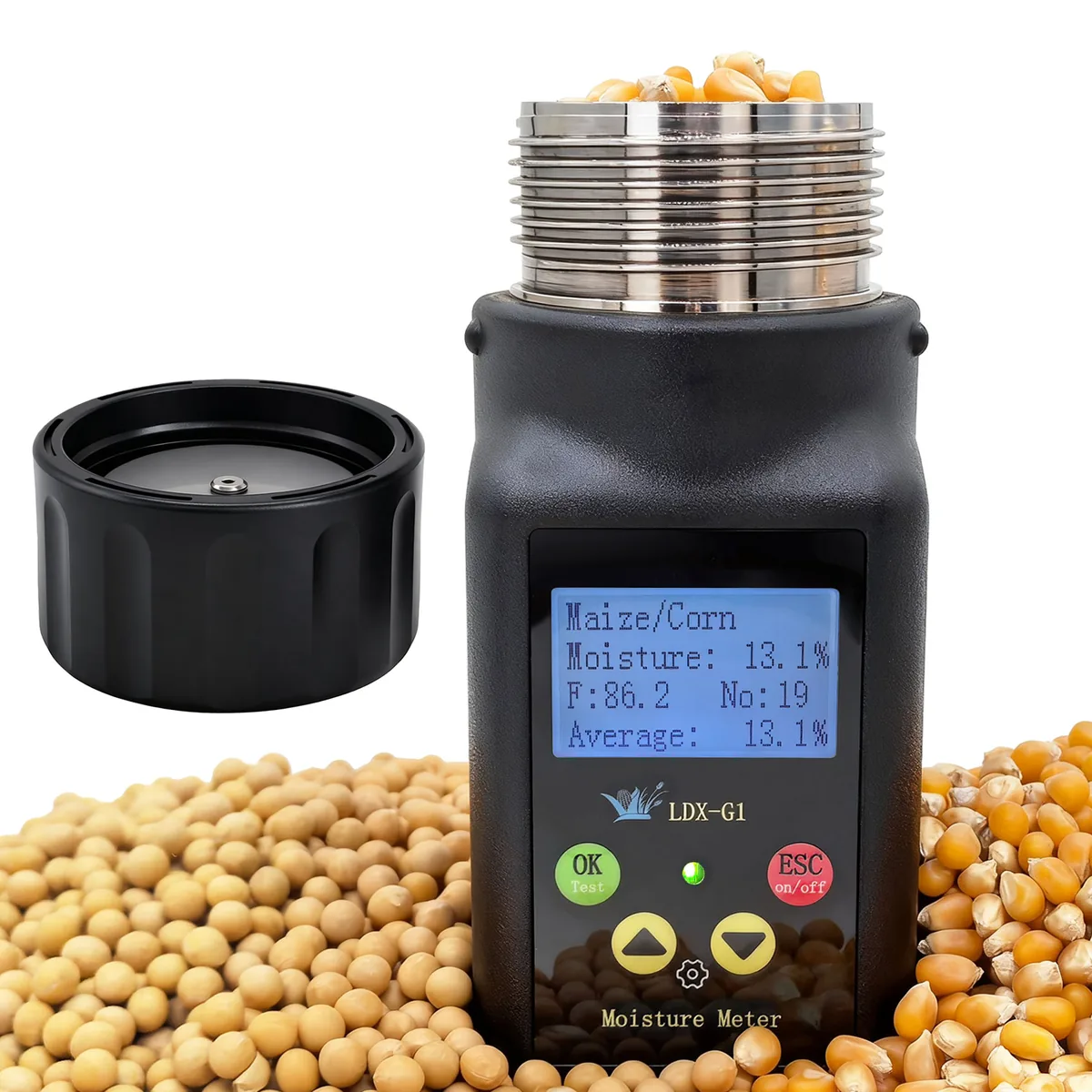
A cup-type grain moisture meter uses a sample cup or measuring chamber. Instead of inserting a probe into the grain mass, the user collects a small grain sample and pours it into the cup or chamber. The device then gives a moisture reading based on the selected grain mode and the sample inside the measuring area.
This type is also commonly described as a sample cup grain moisture tester, grain moisture meter with sample cup, or portable grain moisture tester with measuring chamber.
For users who regularly check corn, wheat, rice, beans or other grains, this form can make the testing process easier to repeat. The user collects a sample, places it into the cup, selects the grain type, and reads the result.
A cup-type meter is especially useful for routine checks in these situations:
- Farm moisture checking before or after harvest
- Grain drying checks
- Storage preparation
- Warehouse receiving
- Small batch grain buying
- Daily grain moisture reference
If you are new to this product shape, read our guide to what a sample cup grain moisture tester is.
Cup-Type vs Probe-Type Grain Moisture Meters: Key Differences
| Comparison Point | Cup-Type Grain Moisture Meter | Probe-Type Grain Moisture Meter |
|---|---|---|
| Measuring method | Grain is poured into a sample cup or chamber | Probe or pins are inserted into grain |
| Sample handling | Uses a collected small sample | Checks grain directly in a bag, pile or container |
| Typical use | Farm, storage, drying and grain receiving checks | Fast checks in bags, piles or stored grain |
| Operation style | More standardized sample handling | More dependent on insertion point and grain contact |
| Portability | Usually portable | Usually portable |
| Sample preparation | Often works with whole grain samples | Usually no separate sample cup needed |
| Suitable users | Farmers, storage users, grain buyers, warehouse operators | Field users, storage users, bagged grain checkers |
The main difference is not simply 鈥渨hich one is better.鈥?The real question is: how will the user take the sample?
If the user wants to collect a small sample and check it in a repeatable way, a cup-type grain moisture meter may be more suitable. If the user wants to insert a probe directly into a bag or grain pile, a probe-type meter may be more convenient.
When a Cup-Type Grain Moisture Meter Makes Sense
A cup-type grain moisture meter is useful when the user wants a portable device for routine grain moisture checking.
For example, a farmer may want to check grain moisture before harvest. A storage operator may want to check grain before loading it into a warehouse. A grain buyer may want a quick moisture reference when receiving corn, wheat or rice.
In these cases, the cup-type design gives the user a clear working process:
1. Collect a representative grain sample. 2. Pour the sample into the measuring cup or chamber. 3. Select the correct grain mode. 4. Take the moisture reading. 5. Repeat if needed with another sample.
This process is easy to understand and suitable for daily farm, storage and receiving use.
A cup-type meter can also be useful when users handle different grains. If the model supports corn, wheat, rice, beans and other grain modes, it can serve as one compact tool for multiple common crops.
For more buying points, see our guide on how to choose a grain moisture meter for corn, wheat and rice.
When a Probe-Type Meter May Be More Suitable
A probe-type meter may be more suitable when the user wants to check grain directly without collecting a separate sample.
For example, if grain is already packed in bags, stored in a pile, or located in a container where a quick direct check is needed, a probe-type device may be easier to use.
This type of meter is also useful when the operator needs to check several positions quickly. The user can insert the probe into different areas and compare the readings.
However, because the result can depend on the insertion point and grain contact condition, users should follow the product manual and take more than one reading when needed.
How to Choose Between Cup-Type and Probe-Type
The best choice depends on your working situation.
| User Need | Better Fit |
|---|---|
| You want to test a small collected grain sample | Cup-type meter |
| You want to check grain directly in a bag or pile | Probe-type meter |
| You handle corn, wheat, rice or beans in small batches | Cup-type meter |
| You need fast checks at different storage points | Probe-type meter |
| You want a portable tool for farm and storage reference | Cup-type or probe-type, depending on sampling method |
| You need official testing or trade settlement results | Follow local official requirements |
For most daily farm, storage and small receiving checks, the important point is not only the meter type. Users should also consider supported grain types, sample handling, ease of use, portability, display clarity and product instructions.
If your main work is harvest, drying or storage, you may also want to read our article on when to check grain moisture during harvest, drying and storage.
Common Grains Tested with Cup-Type Moisture Meters
Many cup-type grain moisture meters are designed for common grains such as corn, wheat, rice and beans. The actual supported crops depend on the specific model, so users should always check the product specification before buying.
For corn users, moisture checking is often related to harvest timing, drying and storage decisions. See our corn moisture meter guide for more details.
For wheat and rice users, moisture checking is often connected with storage, buying and processing preparation. See our wheat and rice moisture meter guide for related use cases.
A Practical Option for Routine Grain Moisture Checking
A portable cup-type grain moisture meter is a practical choice for users who want a simple routine moisture checking tool for corn, wheat, rice and other grains. The sample cup design allows users to collect a small grain sample, place it into the measuring chamber and read the result for daily reference.
Brolangt offers a portable cup-type grain moisture meter designed for routine farm, storage and grain receiving use. You can view product details, supported grain types and basic specifications on the Brolangt grain moisture meter product page.
FAQ
What is a cup-type grain moisture meter?
A cup-type grain moisture meter uses a sample cup or measuring chamber. The user pours a small grain sample into the cup, selects the grain type and reads the moisture result.
Is a cup-type grain moisture meter better than a probe-type meter?
Not always. A cup-type meter is useful for collected sample checking, while a probe-type meter is useful for direct checks in grain bags, piles or storage areas. The better choice depends on how the user takes samples.
Can a cup-type meter test corn, wheat and rice?
Many cup-type grain moisture meters support common grains such as corn, wheat and rice. The actual supported grain types depend on the product model, so users should check the specification before use.
Does a cup-type meter need grinding?
Many portable cup-type meters are designed for whole grain samples and do not require grinding. Users should follow the product manual for the correct operation method.
Can a portable grain moisture meter replace official testing?
No. Portable grain moisture meters are useful for routine checking and daily reference. For official grading, legal inspection or trade settlement, users should follow local official requirements.