
# Corn Moisture Meter Guide for Harvest, Drying and Storage
A corn moisture meter helps users take routine moisture reference checks during harvest, after drying, before storage and during receiving. For farms and grain handling users, the key is not only the device, but when and how samples are checked.
Corn moves through several practical decision points before it becomes a stable stored crop or a received batch. It may be checked in the field, checked again after drying, reviewed before storage, and screened when a lot is bought or delivered. A portable corn moisture tester is useful because it gives operators a quick reference at each of these points without waiting for a fixed station or a full laboratory process.
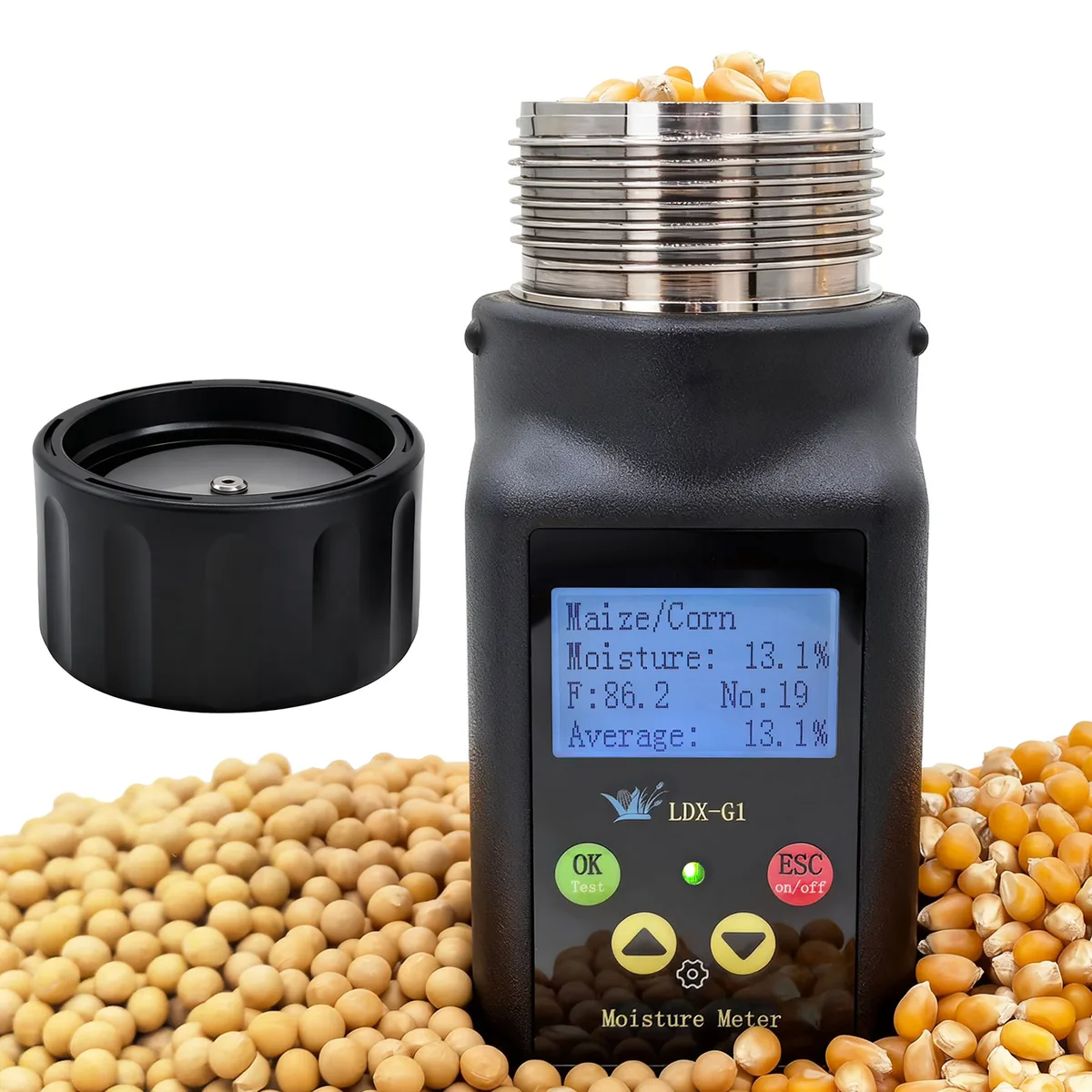
The Brolangt Grain Moisture Meter is a portable cup-type grain moisture meter for routine moisture checking of corn, wheat, rice, soybeans and other grains. For corn users, the most important point is simple: fill the measuring chamber with a whole corn sample, select the correct grain mode, and use the reading as a practical reference for daily handling decisions.
This guide explains where a corn moisture meter fits in the real workflow: harvest, drying, storage, receiving and transport. It also explains what to look for when choosing a portable corn moisture tester for routine use.
Why Corn Moisture Needs Routine Attention
Corn moisture matters because corn is rarely uniform across a whole field, truck, bin or bag. Different field zones may dry at different speeds. Corn harvested in the morning may not behave exactly like corn harvested later in the day. A batch from one supplier may also differ from another batch that looks similar at first glance.
Routine checking does not remove the need for proper handling judgment, but it gives the user a clearer reference. Instead of relying only on appearance or touch, a farm, dryer operator, warehouse worker or receiving point can compare samples and see whether the batch condition is moving in the expected direction.
This is especially useful when corn is handled in multiple steps. A reading before drying, another reading after drying, and a later check before storage can create a simple moisture trail for the batch. That kind of routine record can help the operator notice differences between lots and avoid treating every batch as if it were the same.
For broader grain timing, the related guide on when to check grain moisture explains how routine checks can be placed around harvest, drying, storage and receiving.
Checking Corn Moisture Around Harvest
Harvest is one of the most important times to take corn moisture reference checks. Field lots can vary because of soil conditions, plant maturity, weather exposure, field position and harvest timing. Even when corn from two areas looks similar, moisture can still be different enough to affect the next handling step.
A portable corn moisture meter helps by making field-side or near-field sample checks easier. The user can collect a representative whole-kernel sample, pour it into the sample cup or measuring chamber, select the maize or corn mode, and record the result. The value should be treated as a routine reference, not as a legal or official grading result.
The practical question at harvest is usually not 鈥渨hat is the perfect number?鈥?The more useful question is: how does this field lot compare with the previous lot, the next lot, or the target handling plan? A meter helps users build that comparison.
For better field reference, avoid checking only one handful from the easiest place to reach. A single small sample may not represent a whole field or trailer. Take samples in a way that reflects the actual batch being handled. This makes the portable reading more useful for real decisions.
Using Moisture Reference Checks After Drying
Drying is another point where a corn moisture tester can add practical value. Before drying, the meter can help establish a starting reference. After drying, the meter can help compare the result and see whether the drying process has moved the batch in the intended direction.
This does not mean every kernel in the batch has exactly the same moisture level. Corn in a dryer, trailer, bag or bin may still have variation. That is why sample handling matters. A better routine is to check more than one sample when the batch is large or when the material comes from mixed lots.
After drying, users often need a quick reference before moving the corn to the next step. A portable cup-type meter is useful because the operator can make a quick check near the handling area. For a drying site or farm storage point, this is often more practical than relying only on delayed checks.
A good routine is to write down where the sample came from, when it was checked, and whether the corn was checked before or after drying. These notes make the meter reading more useful because the value is connected to the batch condition, not just written as an isolated number.
Before Storage: Why Batch Checking Matters
Before corn goes into storage, routine moisture checking becomes part of batch condition review. Moisture reference checks can help users think more clearly about whether corn from different fields, suppliers or drying runs should be handled together or watched separately.
A corn moisture meter cannot guarantee storage safety. Storage condition depends on many factors, including the crop, local climate, storage structure, ventilation, cleanliness, pest pressure, and how the batch was handled before storage. Still, moisture reference checking is one of the practical ways to support observation and reduce blind handling.
The main benefit before storage is comparison. If one batch has a noticeably different reference reading from another batch, the operator may choose to review it more carefully, keep it separate, or monitor it more often. The reading does not make the decision by itself, but it adds useful information.
For a deeper storage-focused discussion, see why grain moisture matters before storage. That article explains how moisture reference checks fit with storage observation rather than replacing proper storage management.
Corn Moisture Checkpoints in Daily Work
The same corn moisture meter can be useful at different stages, but the purpose of the check changes with the scenario.
| Corn Scenario | Why Moisture Is Checked | How a Portable Meter Helps |
|---|---|---|
| Harvest | Field lots can vary | Supports quick routine reference |
| After drying | Confirms drying progress | Helps compare before and after samples |
| Before storage | Batch condition matters | Supports storage decision checks |
| Receiving | Lots may differ | Helps screen small samples |
| Transport | Condition may change | Adds another routine check point |
This table should not be treated as a fixed testing rule. It is a practical workflow map. The goal is to place quick reference checks at the points where the information can help users compare batches and decide what needs closer attention.
Receiving and Buying Corn: What a Small Sample Can Tell You
Receiving and buying corn often involve quick screening. A warehouse, farm buyer, processor or small trading user may need to compare incoming lots before unloading, mixing or storing. A portable corn moisture tester can help with this first-level reference check.
The value of a receiving check is not only the number on the screen. It is also the comparison between lots. If two truckloads are expected to be similar but the readings are noticeably different, the user has a reason to review the lot more carefully.
Small sample checks are useful, but sample quality matters. A sample taken only from the top of a bag or the easiest corner of a truck may not represent the lot. A better receiving habit is to take a sample that better reflects the batch. For mixed lots, more than one sample may be needed to get a more useful routine reference.
A portable meter should not be presented as a legal trade settlement tool or a replacement for official inspection. It is best used as a routine reference device for screening, comparison and daily handling support. For more on this use case, see grain moisture checking for buying and receiving.
Why a Cup-Type Meter Fits Routine Corn Checks
A cup-type grain moisture meter is well suited for routine corn checks because it gives the sample a defined measuring chamber. The user pours whole corn kernels into the top metal cup, selects the proper grain mode, and reads the moisture reference value from the display.
This workflow is simple enough for farms, storage sites and receiving points. It also makes the process more consistent than pressing a probe into different places without controlling the sample. For corn, a whole-kernel sample placed into a measuring cup is a practical format for daily reference checking.
A cup-type workflow also encourages better sample habits. The user can take a small sample from the batch, place it into the chamber, and repeat the process with another sample when needed. That makes it easier to compare different field lots, dryer outputs or receiving batches.
If you want to understand the difference between cup-type and probe-type designs, read cup-type vs probe-type grain moisture meter. For details on the measuring cup itself, see what is a sample cup grain moisture tester.
What to Look for in a Corn Moisture Meter
When choosing a corn moisture meter, the first point is whether it supports the grain types you actually handle. If corn is the main crop but you also check wheat, rice or soybeans, choose a grain moisture meter designed for multiple common grains rather than a device that is too narrow for your daily work.
Second, consider the measurement workflow. A portable cup-type device is useful when the user needs to check whole grain samples in different locations. Farms, dryers, grain storage sites and receiving points often need a device that can move with the work instead of staying fixed in one room.
Third, look for easy operation. In real handling environments, the user may need to check samples quickly and record the result. A clear display, simple grain selection, and a practical sample cup design are more useful than complicated functions that workers do not use consistently.
Fourth, think about record habits. The meter reading becomes more useful when it is written down with basic context: crop type, sample source, check time, and handling stage. This is especially important when comparing corn before and after drying, or comparing incoming lots at a receiving point.
The Brolangt Grain Moisture Meter is positioned for routine moisture checking of corn, wheat, rice, soybeans and other grains. For a broader buying framework, see the grain moisture meter selection guide and the portable grain moisture meter buying guide.
FAQ
Can one corn moisture meter be used during harvest and storage?
Yes, the same portable corn moisture meter can be used at different routine check points, including harvest, after drying, before storage and during storage observation. The purpose of the reading may change by stage, so the sample source and checking notes should also be recorded.
Does a cup-type meter test whole corn kernels?
A cup-type grain moisture meter is designed for whole grain samples. For corn, the user places whole kernels into the sample cup or measuring chamber, selects the correct grain mode, and reads the moisture reference value.
Is a portable corn moisture tester useful after drying?
Yes. After drying, a portable corn moisture tester can help compare the batch against earlier samples and support handling or storage decisions. It is especially useful when the operator needs a quick reference near the dryer, storage area or receiving point.
Can it replace official inspection?
No. A portable corn moisture meter should be used for routine reference checking. It should not be used as a replacement for official inspection, laboratory testing, legal trade settlement or official grading.
What should I check before choosing a corn moisture meter?
Check whether the meter supports corn and the other grains you handle, whether the sample workflow is practical, whether the display and operation are clear, and whether the device fits the places where you need to check grain moisture.
Final Recommendation
A corn moisture meter is most useful when it becomes part of a real checking routine. Use it around harvest to compare field lots, after drying to review drying progress, before storage to support batch condition checks, and during receiving to screen incoming corn samples.
For farms, drying sites, warehouses and small grain handling users, a portable cup-type grain moisture meter provides a practical way to collect routine moisture reference information without making the checking process complicated.
To review the product details, visit the Brolangt Grain Moisture Meter. If you are still comparing device types or buying points, the related guides on choosing a grain moisture meter and portable grain moisture meter buying can help you make a clearer decision.